Updated April 2026 — this guide covers the latest competitive landscape including 2025–2026 market shifts.
By Keith Kakadia, Founder at Sociallyin
Facebook (Meta) faces competition across multiple fronts in 2025–2026. Despite a user base of nearly 3 billion people, the platform confronts rivals in social media, digital advertising, regional markets, and emerging privacy-focused niches.
Here are the biggest competitors threatening its dominance:
- TikTok — short-form video, Gen Z engagement
- YouTube — long-form video and social platform
- Google — digital advertising revenue leader
- LinkedIn — professional networking and B2B
- Snapchat — ephemeral content, AR, Gen Z
- Pinterest — visual discovery, high commercial intent
- Amazon — retail media advertising
- WeChat — super-app ecosystem (Asia)
- Signal / Telegram — privacy-focused messaging
- Discord / Reddit — niche community platforms
The bottom line: TikTok and Google represent Facebook’s biggest threats in 2025–2026, while regional super-apps and privacy platforms are reshaping the global landscape.
Businesses need multi-platform social media management to reach audiences where they actually spend time.
Facebook Rivals at a Glance
| Platform | Primary Threat to Facebook | Key Strength |
|---|---|---|
| TikTok | Short-form video dominance | 1B+ MAU, 95 min/day avg usage |
| YouTube | Long-form video platform | Video and content discovery hub |
| Digital advertising revenue | Intent insights + display network | |
| Professional networking | Premier B2B decision-maker hub | |
| Snapchat | Gen Z ephemeral content | AR advertising, young user focus |
| Visual discovery / commerce | High commercial intent traffic | |
| Amazon | Retail media advertising | Purchase-intent ad targeting |
| Super-app ecosystem (Asia) | 1.3B MAU in China, integrated payments | |
| Signal / Telegram | Privacy-focused messaging | Privacy-first messaging architecture |
| Discord / Reddit | Niche community platforms | Highly engaged interest-based groups |
The Social Media Battle Ground: Biggest Competitors of Facebook
Global User Base Competition
TikTok, YouTube, and X (formerly Twitter) compete directly with Meta for global user attention and time spent.
TikTok has redefined social entertainment with short-form video and AI-powered recommendations. The platform has over 1 billion monthly active users and averages 95 minutes per day per user, making it a serious threat to Facebook’s engagement metrics. Its viral potential and algorithmic content discovery have created new pathways for brands to reach younger audiences authentically.
YouTube functions as both a social network and the second-largest search engine (Global Media Insight), making it essential for brand visibility and customer education. Its long-form content format dominates video consumption and captures significant user time that might otherwise go to Facebook’s video features.
X (formerly Twitter) excels in real-time customer interaction and trending conversation participation. While smaller than TikTok and YouTube in overall user base, it maintains a unique position for immediate brand presence and public discourse.
Businesses looking to diversify their platform presence can benefit from a strategic social media strategy that accounts for where their audiences actually spend time.

Demographic-Specific Rivals
Modern social platforms have developed distinct personalities, each serving specific audience segments with specialized features.
Snapchat continues to dominate the younger user market through innovative AR features and ephemeral content. For businesses targeting Gen Z consumers, the platform offers location-based marketing, interactive AR advertising, and authentic brand storytelling.
LinkedIn has established itself as the premier professional networking platform, creating valuable opportunities for social selling and B2B growth. Business leaders use this ecosystem to build thought leadership, connect with decision-makers, and develop strategic relationships.
Pinterest stands out as a visual discovery powerhouse, particularly valuable for businesses in lifestyle, design, and retail sectors. The platform delivers high commercial intent traffic, targeted product discovery, and long-term content visibility.
Digital Advertising Giants
Google vs. Facebook: The Advertising Revenue Battle
Google remains Meta’s largest competitor in digital advertising. Through its Google Ads platform and extensive reach across search and display networks, Google captures a substantial share of global digital ad spending.
The difference between search and social advertising is crucial for business planning. Search advertising captures users actively looking for specific products or services, while social advertising focuses on interest-based targeting and brand discovery. Together, Google, Meta, and Amazon dominate the global digital advertising market, capturing a significant majority of ad spend — estimated over 50% globally and over 60% excluding China.
Amazon also competes for ad budgets through retail media advertising. Its rich shopping-intent data (Amazon Ads) enables businesses to connect with consumers at the point of purchase, creating a direct link between product discovery and buying.
Businesses can complement their search strategy with high-performing social campaigns through paid social advertising.
Regional Power Players
Asian Market Competitors
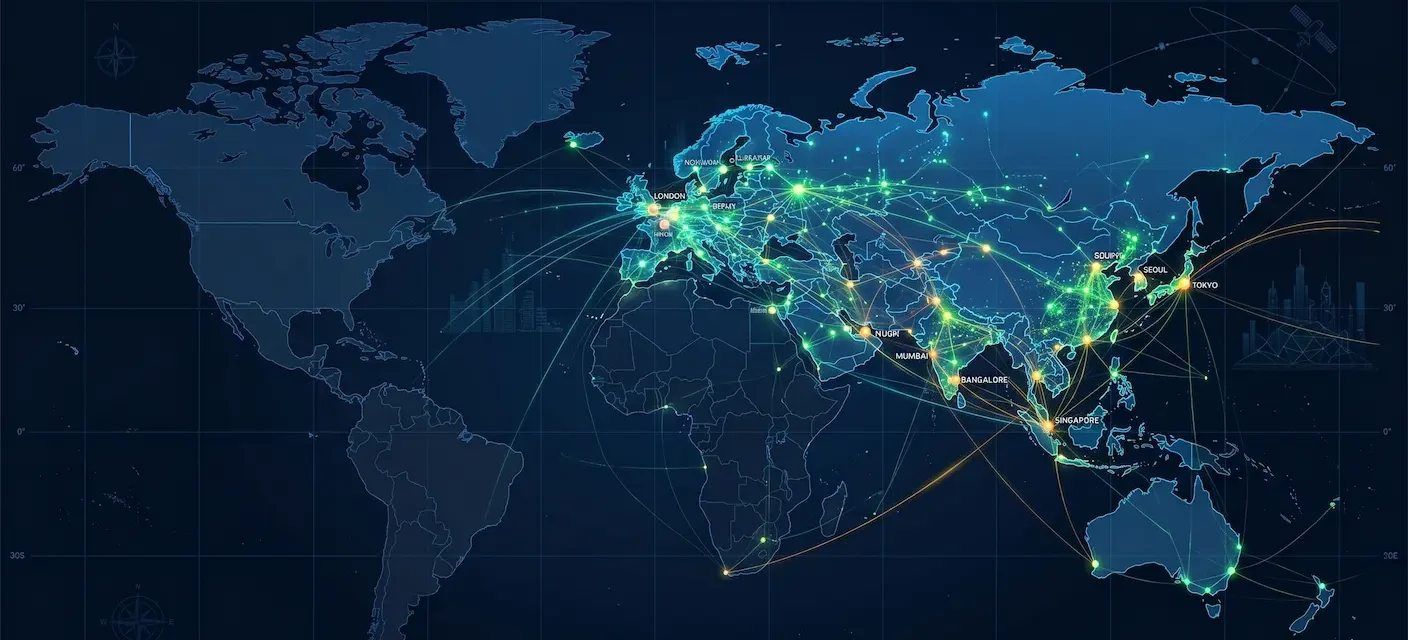
Regional social networks outperform global players by aligning with cultural characteristics and market-specific needs.
WeChat exemplifies the super-app model, particularly in China. With over 1.3 billion monthly active users, it combines social networking, e-commerce, payment services, and government services access (Wikipedia) into one seamless platform. This all-in-one approach has made WeChat indispensable for daily life in China.
Line dominates messaging across Japan, Thailand, and Taiwan. Its success stems from combining entertainment, commerce, and financial services tailored to local preferences.
European Social Networks
VKontakte (VK) is the leading social media platform in Russia, with approximately 89 million+ MAU. It caters to Russian-speaking users with integrated music streaming, advanced video capabilities, and culturally relevant content delivery.
XING has carved out a position in German-speaking regions by offering region-specific job market insights, local business practices, and professional networking optimized for Germany, Austria, and Switzerland (New Work SE).
Emerging Threats: New Competitors to Facebook
Privacy-Focused Platforms
Privacy has become a top priority for consumers and businesses in the digital space. Signal leads in secure communication with end-to-end encryption for all messages (Signal), zero data collection policies (Signal Support), and complete message privacy for sensitive interactions.
Telegram combines security with robust engagement features, offering large-scale community management tools, secure broadcast channels, and private discussion groups for premium customers.
Niche Social Networks

Specialized platforms connect businesses with highly targeted audiences. Discord transforms customer engagement through real-time voice and video communication, dedicated brand community spaces, and interactive events.
Reddit offers direct access to highly engaged, interest-based communities. Businesses benefit from authentic community participation and strategic influencer marketing partnerships.
Competitive Analysis Tools
Understanding your competitive position requires the right analytical tools. These platforms reveal market position, untapped opportunities, and performance benchmarks.
Performance Tracking Platforms
Social Listening Tools
Platforms like Keyhole and Sprout Social provide real-time brand mention tracking, sentiment analysis across platforms, trend identification, and community management feedback monitoring.
Engagement Analytics

Socialinsider and Vaizle deliver audience reach and growth trends, engagement rate benchmarks, content performance metrics, and competitive performance analysis. These insights help measure success against competitors, but expert data analysis and ROI modeling is often needed to translate metrics into actionable strategy.
Strategic Intelligence Tools
Content Analysis Features
Social Status and Porter reveal top-performing content types, engagement patterns, conversion metrics, and content ROI. Professional social media consulting services can help translate these insights into revenue-generating strategies.
Audience Insight Capabilities
Agorapulse provides demographic breakdowns, behavioral analysis, content preference patterns, and engagement timing optimization.

Frequently Asked Questions
Conclusion
The social media competitive landscape in 2025–2026 is defined by platform specialization. TikTok dominates short-form video engagement, Google maintains advertising leadership, and regional super-apps like WeChat prove that local ecosystem integration can outcompete global reach.
Key takeaways:
- TikTok’s 1 billion+ MAU and high daily engagement make it Facebook’s biggest user-attention threat
- Google, Meta, and Amazon together capture over 50% of global digital ad spend
- Regional platforms succeed through cultural adaptation, not scale alone
- Privacy-focused apps are reshaping user expectations around data protection
- Businesses need multi-platform strategies rather than Facebook-only approaches
Related Articles
- TikTok Audience Demographics: Who’s Really Using the Platform — Breakdown of TikTok’s user base by age, gender, and region to sharpen your targeting.
- How to See Facebook Ads of Competitors — Step-by-step guide to research competitor ad creative, copy, and landing pages.
- Social Media Engagement: Strategies That Work — Proven tactics to increase comments, shares, and saves across every major platform.
- Explore Social Media Strategy Services — See how Sociallyin builds data-driven plans tailored to your brand goals and audience.